The long read · Czech cinema
The Resilience of Czech Cinema and Its Global Stars
Czech cinema is one of the great small cinemas of the world: witty, humane and inventive, with three Oscars, the Czech New Wave and a film studio, Barrandov, that has served Hollywood for decades. Here is its story, with the places in Prague to watch it.
Updated October 2026
Barrandov and the early years (to 1945)
Film arrived in Prague almost with the medium itself, and in 1933 the city gained one of the best-equipped studios in Europe, Barrandov, on a hill above the Vltava. It is still working today, for Czech and international productions alike.
The 1930s were a first golden age, with sparkling comedies and Gustav Machatý’s Ecstasy (1933), which made the Viennese actress Hedy Lamarr famous.
Puppets, the New Wave and the golden 1960s (1945–1989)
After the war Czech film-makers became masters of animation and fantasy: Jiří Trnka’s puppet films and Karel Zeman’s Invention for Destruction (1958), with its living engravings in the style of Jules Verne, were admired across the world.
In the 1960s a generation from the Prague film school, FAMU, made the Czech New Wave: playful, ironic and humane. The Shop on Main Street won the Oscar in 1966 and Jiří Menzel’s Closely Watched Trains in 1968; Miloš Forman’s Loves of a Blonde and The Firemen’s Ball were both nominated. After 1968 several of its directors worked abroad or could not work for years, and many of their films returned to screens only later.
The modern era (1990–present)
Since 1990 Czech cinema has found new audiences at home and abroad. Jan Svěrák’s Kolya, the story of a cellist and a small boy in the Prague of 1988, won the Oscar for best foreign language film in 1997, and Jan Švankmajer’s surreal stop-motion films have a following around the world.
Barrandov and Prague have also become one of Europe’s favourite places to film, and every summer Karlovy Vary fills with film lovers for its international festival.
Must-watch films: the classics
To understand Czech cinema, start with the classics of the 1960s, then the films that came after.
- The Shop on Main Street (Obchod na korze, 1965): Ján Kadár and Elmar Klos’s moving wartime drama, winner of the Oscar for best foreign language film.
- Loves of a Blonde (Lásky jedné plavovlásky, 1965): Miloš Forman’s tender, funny story of a factory girl and a pianist from Prague, nominated for the Oscar.
- Daisies (Sedmikrásky, 1966): Věra Chytilová’s anarchic, dazzling farce of two young women, the wildest film of the New Wave.
- Closely Watched Trains (Ostře sledované vlaky, 1966): Jiří Menzel’s bittersweet comedy of a young railwayman in the war, winner of the Oscar.
Must-watch films: the later masters
- The Firemen’s Ball (Hoří, má panenko, 1967): Forman’s last Czech film, a sharp comedy of a village fire brigade’s disastrous ball, nominated for the Oscar.
- Invention for Destruction (Vynález zkázy, 1958): Karel Zeman’s enchanting Jules Verne fantasy, made to look like the engravings in the original books.
- Alice (Něco z Alenky, 1988): Jan Švankmajer’s unsettling stop-motion take on Lewis Carroll.
- Kolya (Kolja, 1996): Jan Svěrák’s warm story of a Prague cellist and a little boy, with Zdeněk Svěrák, winner of the Oscar.
The stars and the film-makers
Czech cinema has given the world great directors and much-loved actors.
- Miloš Forman (1932–2018): from the New Wave to Hollywood, where he won the Oscar for best director twice, for One Flew Over the Cuckoo’s Nest and Amadeus.
- Věra Chytilová (1929–2014): the fearless director of Daisies and the leading woman of the New Wave.
- Jiří Menzel (1938–2020): director and actor, whose Closely Watched Trains won the Oscar.
- Zdeněk Svěrák: writer and star of Kolya, and one of the best-loved figures of Czech culture.
- Jan Švankmajer: the surrealist animator whose films have inspired film-makers around the world.
Where to watch in Prague and Karlovy Vary
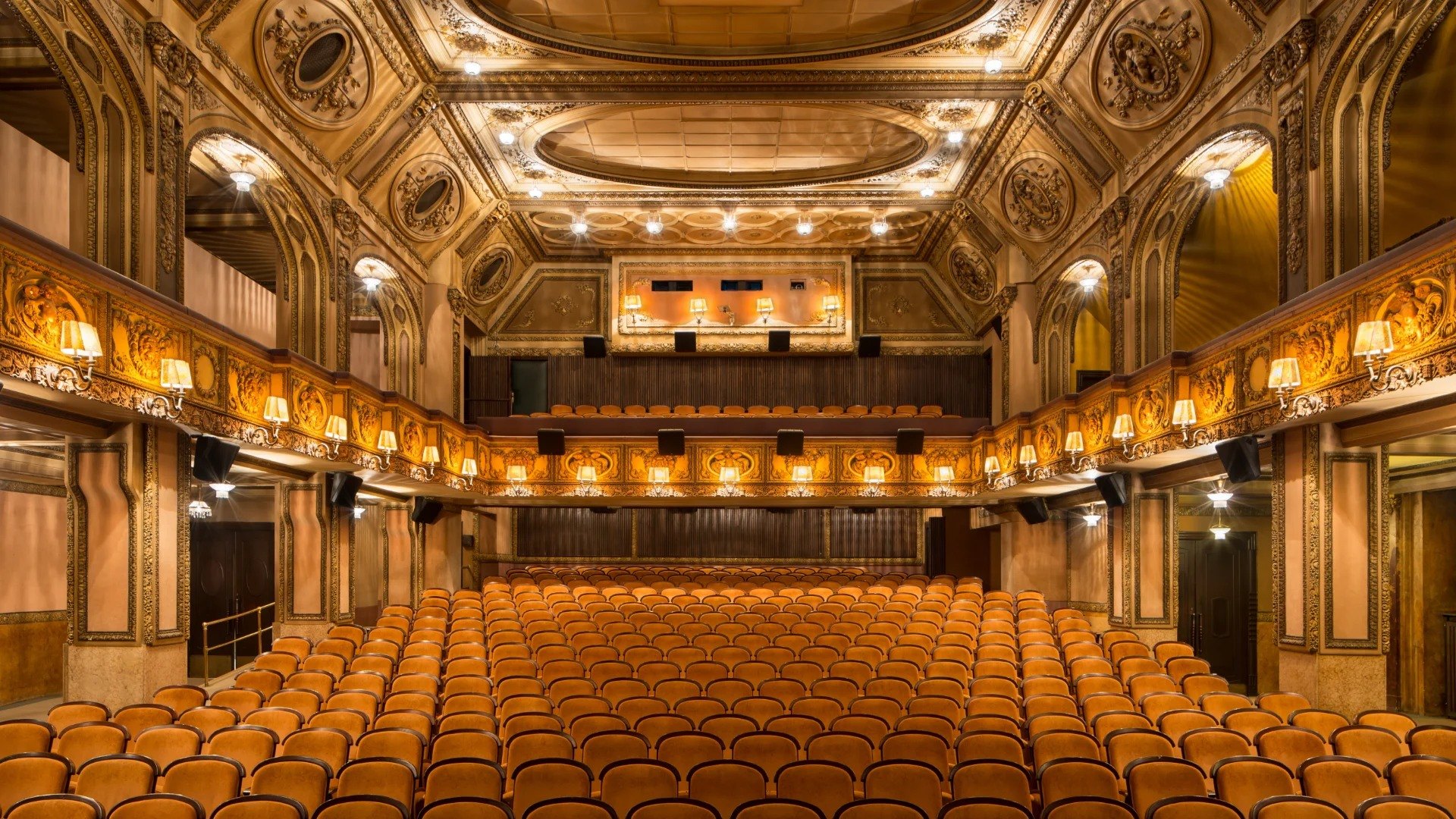
Prague’s grand old cinemas are part of the pleasure: Kino Lucerna, the grand old cinema inside the Art Nouveau Lucerna Palace, is a joy in itself, Kino Světozor shows the best of Czech and world film, and the National Film Archive keeps the country’s film heritage. Every summer the Karlovy Vary International Film Festival, held since 1946 and awarding the Crystal Globe, takes over the spa town.
Our advice: catch a restored Czech classic with English subtitles at Světozor or Lucerna, and book your Karlovy Vary accommodation early for festival week.
Kino Lucerna Kino Světozor National Film Archive Karlovy Vary International Film Festival
Hidden on the silver screen: international productions filmed in Czechia
Prague’s untouched old town and the stages of Barrandov have made Czechia one of Hollywood’s favourite places to film. Miloš Forman shot Amadeus in the Estates Theatre, where Mozart’s Don Giovanni had its premiere; Tom Cruise ran across Charles Bridge and Kampa in Mission: Impossible; and Karlovy Vary played Montenegro in Casino Royale. Our page on Prague on film tells their stories.
- The Chronicles of Narnia: The Lion, the Witch and the Wardrobe (2005): shot mainly in New Zealand, with its last months of filming in Prague.
- The Chronicles of Narnia: Prince Caspian (2008): filmed largely in and around Prague, with sets at Barrandov.
Prague on film National Film Archive
Czech-born names of world cinema
Czech-born film-makers have left their mark far beyond Prague.
- Karel Reisz (1926–2002): born in Ostrava, the British director of Saturday Night and Sunday Morning and The French Lieutenant’s Woman.
- Herbert Lom (1917–2012): born in Prague, the actor best remembered as Chief Inspector Dreyfus in the Pink Panther films.
- Tom Stoppard: born in Zlín, the playwright who won an Oscar for the screenplay of Shakespeare in Love.
- Miroslav Ondříček (1934–2015): the cinematographer of Forman’s films, nominated for the Oscar for Ragtime and Amadeus.
Prague on film: Amadeus, Mission: Impossible and Casino Royale
Questions and answers
Which Czech films have won the Oscar?
The Shop on Main Street (1966), Closely Watched Trains (1968) and Kolya (1997), all for best foreign language film.
When is the Karlovy Vary film festival?
Every summer, usually at the beginning of July; check the festival’s website for this year’s dates.
Join the conversation
Which Czech film or star do you love most? Share your favourite scenes and the films we should add.
- Loading the conversation…
Sources: the Academy of Motion Picture Arts and Sciences, the Karlovy Vary International Film Festival, Barrandov Studios, Czech Radio, visitczechia.com and the festival press, checked on 5 November 2026. Trailers are embedded from the official YouTube channels of each film’s distributor; where none exists online, we leave it out.